Have recent bouts of rain in Southern California led to water damage on your cherished paintings? Are you noticing troubling signs such as mold, flaking, blistering, discoloration, or warping on your artwork? Fear not! This article is tailored to assist you.
While rainy weather benefits the environment, it can pose a risk to artworks. Understanding how to identify and prevent water damage is vital for art collectors. Such damage is often subtle, emphasizing the importance of early detection to preserve your valuable pieces. Here's a guide to help you navigate potential risks, safeguard your art, and collaborate with art conservation professionals.
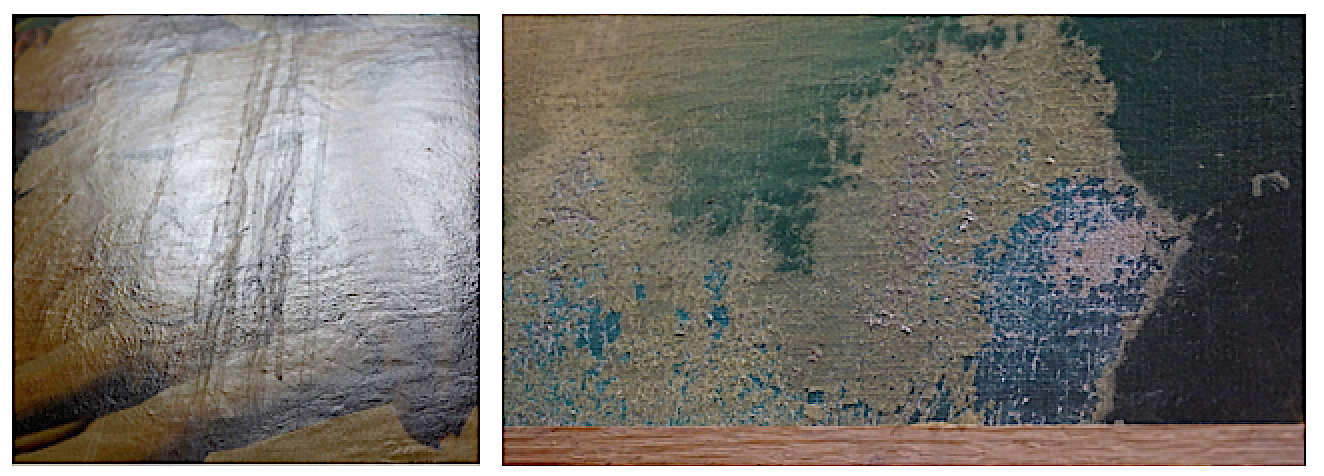 |
| Here’s an example of water damage on paintings: stains, vast areas of fogged or bloomed varnish and crystallization of varnish resin. |
Detecting Water Damage:
Water damage to paintings can manifest in various ways, including discoloration, warping, and mold growth. Keep a vigilant eye on changes in the paint surface, like flaking or blistering, as these may indicate exposure to moisture. Discoloration, appearing as yellow or brown stains, is another water damage sign. Check the back of the artwork for mold, thriving in damp conditions. If you notice any of these signs, take prompt action and consult with an art conservation professional.
Preventing Water Damage:
Effective prevention starts with proper storage and display. Ensure artworks avoid direct contact with walls and keep them away from windows and doors where water might seep in. Maintain stable humidity levels in your art storage space, as fluctuations can contribute to water damage. During rainy seasons, use dehumidifiers and inspect the storage area for leaks. Regularly assess your roof and windows to prevent water intrusion.
 |
| Climate control is very important for preventing water damage on paintings |
Collaborating with Art Conservation Professionals:
If you suspect water damage on paintings or other artworks, promptly consult with an art conservation professional. Each conservation/restoration project is unique, requiring an expert to determine appropriate treatments. Conservators possess the expertise to assess damage extent and recommend suitable restoration measures. When contacting a conservator, provide detailed artwork information, including dimensions, history, current condition, and noticeable changes. Clear communication ensures the conservator understands your artwork's unique needs.
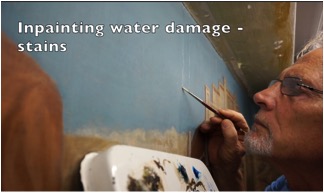 |
| Professional art conservators have the expertise to mitigate the effects of water damage on paintings and other artworks |
Tip Summary:
Identifying Water Damage: Learn to spot signs like discoloration, warping, and mold growth.
Preventive Measures: Protect your art with proper storage, stable humidity levels, and regular maintenance.
Consulting Conservators: Engage with art conservation professionals promptly for expert assessment and restoration.
Has the water already gotten to your artwork? Fine Art Conservation Laboratories can help with your insurance claim!
Fine Art Conservation Laboratories’ 45 years of expertise in preserving and restoring art offers invaluable help and practical knowledge for helping people through the insurance claim process for damaged collectibles and art pieces. Our experienced team understands the complexities of insurance claims related to art, heirlooms, and antiques, providing reports that are properly prepared with information that the insurance company never puts in doubt. Fine Art Conservation Laboratories charges flat fees for this work, not a percentage of the claim settlement, and our expertise is honored nationwide. Let us help make the art, heirloom, and collectible part of the insurance claim process as seamless as possible and preserve your peace of mind. See this article for a couple short stories about art owners’ journey with insurance claim and fire/ water damage. Please call 805-564-3438 if you have questions or would like to schedule a consultation with our expert art conservators.
This blog post has been syndicated at ExpertClick.com. What does it mean that this article is “ syndicated”?
It’s a bit of a coup to get an article syndicated, and its certainly prestigious, as additional “proof” that the info and the author are considered far and wide authoritative and an expert in the field. So, enjoy and trust our content!! This article was syndicated for USA national redistribution.
When something is published, usually by a news source, and is made available through different venues for redistribution then it is said to be syndicated. Publications that are syndicated are usually considered of value as being from an expert, educational, new worthy or valuable for wide popular interest. See syndication page at the renowned publicity site: https://www.expertclick.com/NRWire/
This website’s syndication included:
1) Included in the ExpertClick Press Room as a ‘press release.’ (different than a ‘news release’)
2) Included in the ‘Speaker Bureau Platform Page.’
3) Shown on the front page of ExpertClick, in rotation with other most recent posts.
4) Shown in the ‘News Release Results page.’
5) Included on optimized for searches on all my topics of expertise.
6) Shown via RSS linked from the Press Room. (A specific way news is actively distributed within the industry)
7) Shown in the full RSS feed from ExpertClick. (Another, different specific way news is actively distributed within the industry)
8) Syndicated to LexisNexis.com As of 2006, the company had the world’s largest electronic database for legal and public-records related information, distributor of academic content and expert opinion.
This article has been syndicated at https://www.expertclick.com/NRWire/


