Monday, October 23, 2023

Protecting Art and Paintings from Earthquakes in Las Vegas

 A living room with a couch and a chandelier

Description automatically generated

Las Vegas is located in a seismically active region, so it is important to take steps to protect your art and paintings from earthquakes. This article will provide you with tips on how to secure your art and paintings, develop a disaster response plan, and purchase earthquake insurance.

Securing your art and paintings

The most important thing you can do to protect your art and paintings from earthquakes is to secure them to the walls or other surfaces. This can be done using a variety of methods, including:

  • Earthquake-safe brackets and screws: These brackets and screws are designed to withstand the shaking and vibration of an earthquake. They can be purchased at most hardware stores.

  • Museum wax: Museum wax is a type of adhesive that can be used to adhere small objects to surfaces. It is safe for use on art and paintings.

  • Security cables: Security cables can be used to secure larger objects to walls or other surfaces. They are often used to secure valuable artwork in museums and galleries.

When securing your art and paintings, it is important to choose the appropriate method for the size and weight of the object. You should also make sure that the method you choose is compatible with the type of surface you are attaching the object to.
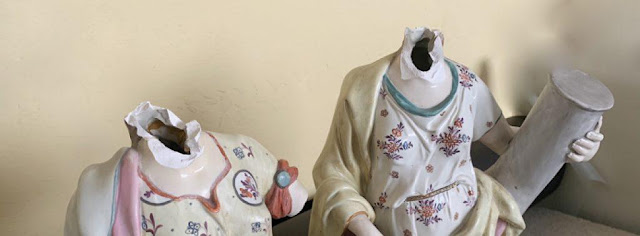
two Chinese figural statues with their heads broken off

Here’s an anecdote video about the damage to a painting that fell off of the wall due to an earthquake and the destruction of the Chinese statues (pictured above) underneath it. Besides putting huge holes in the painting and causing original paint loss (and frame damage) it completely shattered the heads of the Chinese statues worth $10,000’s.

While this accident caused $50,000.00 of damage and loss of value (insurance covered it), a cherished irreplaceable heirloom would have been a heartbreaker… but totally avoidable!

Surprisingly, an easy, quick, do-it-yourself anchoring technique can save you in all of these tips mentioned above; this will help you big time! Here’s 1:30 sec quick fun interesting video: CLICK HERE FOR VIDEO


Developing a disaster response plan

In the event of an earthquake, it is important to have a plan in place for protecting your art and paintings. This plan should include the following:

  • A list of all of your art and paintings: This list should include the title, artist, and value of each object. You should also include a photo of each object.

  • A plan for evacuating your home or business: This plan should include an evacuation route and a meeting place for your family or employees.

  • A plan for protecting your belongings: This plan should include steps for protecting your art and paintings from damage. You may want to consider storing your art and paintings in a safe place, such as a fireproof safe or a climate-controlled storage facility.

Purchasing earthquake insurance

Earthquake insurance is a type of insurance that covers damage to your property caused by an earthquake. If you have a collection of art and paintings, it is important to make sure that they are covered by earthquake insurance.

When purchasing earthquake insurance, it is important to choose a policy that covers the full value of your art and paintings. You should also make sure that the policy covers the type of damage that is most likely to occur in your area.

Additional tips

Here are some additional tips for protecting your art and paintings from earthquakes:

  • Store heavy objects on lower shelves. This will help to prevent them from falling and causing damage to other objects below.

  • Place fragile objects in cabinets or drawers. This will help to prevent them from falling and breaking during an earthquake.

  • Consider storing your art and paintings in a climate-controlled environment. This will help to protect them from damage caused by temperature and humidity changes.

  • Have your art and antiques appraised by a professional. This will help you to determine their value and make sure that they are properly insured.

By following these tips, you can help to protect your art and paintings from earthquakes.

Conclusion

Earthquakes can cause significant damage to art and paintings. By following the tips in this article, you can help protect your art and paintings from earthquakes.

Do you have art collection care questions? Call (702) 757-3820.

Art and antiques appraisal questions? Call Richard Holgate at 805-895-5121.


Here is a real-life testimonial about Fine Art Conservation Laboratories

“Scott,
Thanks for writing such a good article on the Italian earthquake. I was glad to read it and send it on to friends—some of them in Italy!

We do take many of the precautions you mentioned in your article and book including having earthquake insurance in Indiana. The New Madrid fault rumbles here every once in a while and after living in CA we would never take a chance. Just last year we had a small quake that rattled all my antiques and would have broken quite a few items in a pottery collection.  But we bought some Museum Wax when we visited my sister in San Diego in December. David had installed Plexiglas in the front of the open case. Plus we have wires on many bookshelves. Thanks for your tips and coaching. It pays to be prepared!

All my best, Lynda"

More about Fine Art Conservation Laboratories - Las Vegas
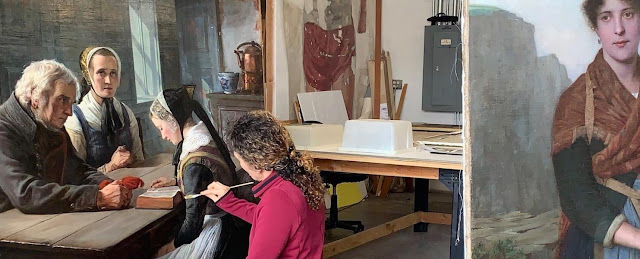
Conservator Virginia Panizzon sitting at an easel doing in-painting on a large history painting

Do you have artwork that has flaking paint, is dirty, has yellowed varnish, or is rippled or distorted, has been ripped, or is stained or moldy or cracking (hopefully, not ALL of those problems all on the same painting!)? We are happy to discuss with you on the phone or at your house or office any questions you may have about the condition of your artwork… and we know all your questions (and the answers) before you ask them.

“We know a thing or two because we’ve seen a thing or two.”

Scott M. Haskins, Principle, has been active professionally since 1975 and our other two painting conservators have been 1st class-quality veterans for decades.

Fine Art Conservation Laboratories (FACL, Inc. Est. 1986) provides on-location consultations and pick up/delivery professional fine art restoration services for someone who has inherited… or found a treasure, the avid collector, the weekend art dealer, or professionally oriented collections. FACL is also recognized and well-known nationwide and internationally for art restoration work on murals. Art storage and other related services are also available in association with the art conservation lab and services. FACL offers specialized services for art-related items affected by natural and home disasters.

The FACL 5,000 sq ft. painting conservation facility is well equipped for work on your single, small family heirloom or for large projects (both in size and in number of items as a result of a disaster, for example). A very large 12’ hot table aids in the consolidation and stabilizing treatments. In addition, 5,000 sq. ft is available for large projects and art storage. This allows for timely response to insurance claims needs and for disaster response contracts for collections and special projects. While most mural projects are done on location, murals that have been removed from their walls are often worked on in our facilities. Easy truck access and large roll-up freight doors make handling regular shipments safer and make larger shipments possible. Let’s talk about your questions! (702) 757-3820 or FACLOfficeManager@gmail.com

On-location projects and mural conservation services have been a focus of Scott M. Haskins since working in Italy in 1975. Both small projects and very large public art projects are of interest (both historical and contemporary). Renowned for excellent quality work, resolving difficult problems, and managing very large projects, over 450 murals have been worked on in many of the states of the USA.  

Fine Art Conservation Laboratories’ 45 years of expertise in preserving and restoring art offers invaluable help and practical knowledge for helping people through the insurance claim process for damaged collectibles and art pieces. Our experienced team understands the complexities of insurance claims related to art, heirlooms, and antiques, providing reports that are properly prepared with information that the insurance company never puts in doubt. Fine Art Conservation Laboratories charges flat fees for this work, not a percentage of the claim settlement, and our expertise is honored nationwide. Let us help make the art, heirloom, and collectible part of the insurance claim process as seamless as possible and preserve your peace of mind. 

Background and Personnel
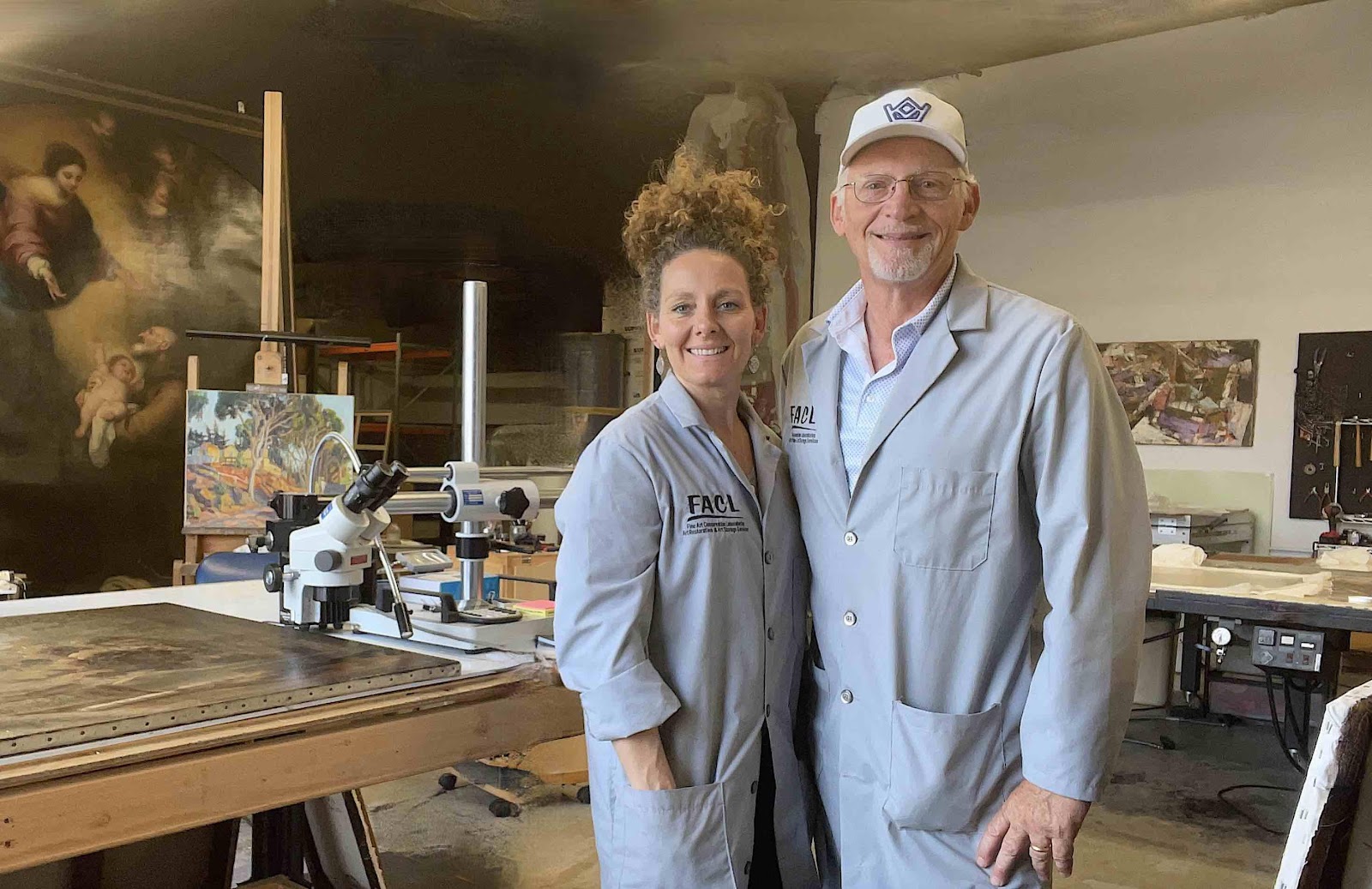
A person and person standing in a room

Description automatically generated

Scott M. Haskins 

(1975-1978) graduated from the Italian government - Lombardy Region (ENAIP) 3-year master’s degree level painting conservation program run in conjunction with the Istituto Centrale del Restauro (ICR) in Rome (the national center). Additional professional training was obtained in the field of art on paper with senior art conservator, Joe Nkruma from the Kunst Museum, Bern Switzerland; polarizing microscopy training from the McCrone Institute, Chicago Il; techniques for treatments on oversized paintings workshops in Italy and those organized through the American Institute for Art Conservation (NY, Toronto). See website for additional background material, Murals Capabilities Statement, Consultation Capabilities Statement, Expert Witness Capabilities,


Click here for mural capability statement: https://www.FineArtConservationLab.com/mural/

Click here for past consultation jobs/clients:

https://www.FineArtConservationLab.com/consultations/

Click here for our FACL blog:

 http://www.FineArtConservationLab.com/blog/

Ms. Virginia Panizzon, 

veteran art conservator has more than 20 years of experience in all aspects of painting conservation treatments and full-time professional commitment. 

Brooke Hendershott and Sarah Favret assist the art conservators and are trained conservation technicians with extensive experience in art conservation treatments including on-site services, art cataloging, art handling/transport, and disaster response services. 

Ms. Gena Dillon (Business Manager, Office Comptroller, and Logistics) contributes valuable support services.

Flora Arguilla, MBA oversees our satellite operations in Las Vegas and oversees media duties. 

Several other very experienced, professional, specialized, conservator associates and technicians assist the FACL art conservators and techs on a project-by-project basis. On large projects (like murals or disaster response clean up), a network of specialized professionals, and very experienced, qualified associates have been part of our team since 1978.

See more about our adventures in art conservation in our website’s media room. Click Here.

Article Syndication

A newspaper rack with newspapers on it

Description automatically generated

This blog post has been syndicated at ExpertClick.com. What does it mean that this article is “syndicated”? See the end of the article for an explanation.

It's a bit of a coup to get an article syndicated, and it's certainly prestigious, as additional "proof" that the info and the author are considered far and wide authoritative and an expert in the field. So, enjoy and trust our content!! This article was syndicated for USA National Redistribution. 

When something is published, usually by a news source, and is made available through different venues for redistribution then it is said to be syndicated. Publications that are syndicated are usually considered of value as being from an expert, educational, new worthy, or valuable for wide popular interest. See the syndication page at the renowned publicity site: https://www.expertclick.com/NRWire/Releasedetails.aspx?id=299679


This website's syndication included:

1) Included in the ExpertClick Press Room as a ‘press release.’ (different than a ‘news release’)

2) Included in the ‘Speaker Bureau Platform Page.’

3) Shown on the front page of ExpertClick, in rotation with other most recent posts.

4) Shown in the ‘News Release Results page.’

5) Included in optimized searches on all my topics of expertise.

6) Shown via RSS linked from the Press Room. (A specific way news is actively distributed within the industry)

7) Shown in the full RSS feed from ExpertClick. (Another, different specific way news is actively distributed within the industry)

8) Syndicated to LexisNexis.com As of 2006, the company had the world's largest electronic database for legal and public-records-related information, distributor of academic content, and expert opinion.

This article has been syndicated at https://www.expertclick.com/NRWire/Releasedetails.aspx?id=299679


Friday, October 13, 2023

Smoke-Damaged Art Repair in Las Vegas – Top 3 Tips

Dealing with the aftermath of smoke-damaged paintings, art, and antiques in Las Vegas demands expert help. This article shares real-life scenarios that can save you substantial stress and money. It's crucial to take these lessons to heart and plan ahead to prevent bigger issues. Both stories highlight a fire incident occurring next door that impacted valuable art collections.
picture of a smoke-damaged office that has art on its walls

1st Story (For Las Vegas Condos and Businesses): 

After a nearby fire necessitated a new roof for an older building, concerns for the art gallery next door grew. While the artworks escaped the fire, the cleanup and repairs still posed a danger to the collection. The landlord and roofing company initially lacked knowledge about caring for valuable artwork. 

(1st tip). It became the lessee's responsibility to educate them about necessary precautions. In this case, the gallery owner hired an art conservator, who provided explicit instructions about the care of the artworks. Despite the warnings, the roofing company disregarded them. It took a firm stance from the gallery owner, and the threat of a lawsuit, to save substantial cleanup costs when the roofing project didn't go as planned. 

(2nd tip). Having an experienced art professional on the gallery owner's side lent credibility. 

2nd Story (Relevant to Las Vegas Galleries): 

Recently, a New York gallery, severely affected by a neighboring fire's smoke, faced a daunting task. The disaster response company, ServPro, declined to handle the artwork due to high liability and lack of training. Seeking a professional art conservator with disaster response experience was the right move. 

(3rd tip). Referring to the American Institute for Conservation of Historic and Artistic Works (AIC) website for a local expert was a wise choice. High-quality art conservation labs like Fine Art Conservation Laboratories excel in handling evaluating testing cleaning artwork. They can rescue seemingly "total losses" with impressive results. 
Before & after pictures of a smoke damaged painting being cleaned


In our image, you can see a painting deemed a loss by the insurance company. It was restored to perfection, thanks to skilled painting conservators' expertise. 


 The Importance of Art Conservation in Las Vegas 

 Las Vegas, a city known for its vibrant arts and culture scene, is also home to an array of priceless artworks and antiques. These treasures can be a source of immense pride and heritage, but they are not immune to the unexpected. The dangers include such things as the perils of fire and smoke damage. The stories we share today explain the key role of art conservation in preserving the cultural heritage of Las Vegas. Because Las Vegas is a city that thrives on creativity and artistic expression, the restoration of smoke-damaged art and antiques is even more important. 

When disaster strikes, it's essential to act swiftly and wisely to protect these invaluable pieces. Here are the top three tips that can make all the difference when handling smoke-damaged artworks in Las Vegas. 


1. Educate and Advocate for Your Artwork 

In Las Vegas, where many valuable art collections are housed in condos and businesses, communication is key. The first story we shared highlights the importance of educating those responsible for repairs on how to protect artwork during renovations. Whether it's a condo owner or a business proprietor, it's essential to be proactive and take the necessary precautions (1st tip). Expert art conservators can provide detailed instructions on how to safeguard artwork. In our story, a gallery owner's persistence and a threat of legal action ensured that the roofing project proceeded as planned. This ultimately saves a significant amount on cleanup and downtime costs (2nd tip). 

 2. Seek Expert Guidance 

 The second story, which revolves around a New York gallery, serves as a valuable lesson for Las Vegas residents. When smoke damage impacts an art collection, seeking professional help is imperative. Disaster response companies, while excellent at handling certain aspects, may not be equipped to handle valuable artwork due to the high liability involved. Professional art conservators with disaster response experience are the ideal choice (3rd tip). By turning to experts in handling, evaluation, testing, and cleaning of art, you can ensure the proper care of your valuable pieces. 
 

Preserving Las Vegas's Cultural Heritage 

 Las Vegas is not only a hub for entertainment but also a city with a rich cultural heritage. The art and antiques found in the city tell a story of creativity, history, and the vibrant spirit of its residents. When disaster threatens to damage this legacy, art conservation professionals step in as the guardians of our shared history. Art conservators, like those at Fine Art Conservation Laboratories, exemplify the dedication and expertise needed to restore seemingly irreparable damage. In our image, you can see a painting that was initially declared a total loss by an insurance company but was saved through meticulous restoration. The teamwork between the clients, ServPro, and art conservators represents the collaborative spirit of Las Vegas while preserving its cultural treasures. 

Conclusion: Protecting Las Vegas's Artistic Legacy 

 As we navigate the complex world of art and antique significance in Las Vegas, it becomes evident that professional guidance is essential. Artworks and antiques are not just possessions but the embodiment of history and creativity. By learning from these stories and following the top three tips, Las Vegas residents can ensure that their cultural treasures remain vibrant and enduring, preserving the city's rich artistic legacy for generations to come. 
If you’d like to ask our conservators a question, please call (702) 757-3820 or visit our website

Fine Art Conservation Laboratories’ 45 years of expertise in preserving and restoring art offers invaluable help and practical knowledge for helping people through the insurance claim process for damaged collectibles and art pieces. Our experienced team understands the complexities of insurance claims related to art, heirlooms, and antiques, providing reports that are properly prepared with information that the insurance company never puts in doubt. Fine Art Conservation Laboratories charges flat fees for this work, not a percentage of the claim settlement, and our expertise is honored nationwide. Let us help make the art, heirloom, and collectible part of the insurance claim process as seamless as possible and preserve your peace of mind. 

This blog post has been syndicated at ExpertClick.com. 
What does it mean that this article is “ syndicated”? It’s a bit of a coup to get an article syndicated, and it’s certainly prestigious, as additional “proof” that the info and the author are considered far and wide authoritative and an expert in the field. So, enjoy and trust our content!! 

This article was syndicated for USA National Redistribution. When something is published, usually by a news source, and is made available through different venues for redistribution then it is said to be syndicated. Publications that are syndicated are usually considered of value as being from an expert, educational, new worthy, or valuable for wide popular interest. 

See the syndication page at the renowned publicity site: https://www.expertclick.com/NRWire/ 
 This website’s syndication included: 
  •  1) Included in the ExpertClick Press Room as a ‘press release.’ (different than a ‘news release’) 
  •  2) Included in the ‘Speaker Bureau Platform Page.’ 
  •  3) Shown on the front page of ExpertClick, in rotation with other most recent posts. 
  •  4) Shown in the ‘News Release Results page.’ 
  •  5) Included on optimized for searches on all my topics of expertise. 
  •  6) Shown via RSS linked from the Press Room. (A specific way news is actively distributed within the industry) 
  •  7) Shown in the full RSS feed from ExpertClick. (Another, different specific way news is actively distributed within the industry) 
  •  8) Syndicated to LexisNexis.com As of 2006, the company had the world’s largest electronic database for legal and public-records-related information, distributor of academic content, and expert opinion. 
 This article has been syndicated at https://www.expertclick.com/NRWire/

Wednesday, September 13, 2023

Moldy Painting Restoration and other Disaster Response Services in Las Vegas

The recent floods in Las Vegas have caused widespread damage, and unfortunately, works of art and heirlooms are not immune. Weather events like this have led to people needing smoke, mud, water, and moldy painting restoration services. Moldy painting restoration is one of our top-requested services because of weather-related disasters. We have over 30 years of experience and have worked on a wide variety of items, including paintings, murals, heirlooms, and collectibles. We understand that art and collectibles are often irreplaceable, and we take great care to restore them to their former glory.
Our disaster response services include: Emergency assessment: We will quickly assess the damage to your art and collectibles and develop a plan for restoration. Stabilization: We will take steps to prevent further damage to your art and collectibles. Cleaning: We will clean your art and collectibles using gentle methods that will not damage them. Repair: We will repair any damage to your art and collectibles using traditional and innovative techniques. Restoration: We will restore your art and collectibles to their former glory.
We also offer a variety of other services, such as: 
Storage: We can provide secure storage for your art and collectibles. 
Transportation: We can safely transport your art and collectibles to and from our facility. 

Fine Art Conservation Laboratories’ 45 years of expertise in preserving and restoring art offers invaluable help and practical knowledge for helping people through the insurance claim process for damaged collectibles and art pieces. Our experienced team understands the complexities of insurance claims related to art, heirlooms, and antiques, providing reports that are properly prepared with information that the insurance company never puts in doubt. Fine Art Conservation Laboratories charges flat fees for this work, not a percentage of the claim settlement, and our expertise is honored nationwide. Let us help make the art, heirloom, and collectible part of the insurance claim process as seamless as possible and preserve your peace of mind. 

 If you have any art or collectibles that have been damaged by a disaster, please contact Fine Art Conservation Laboratories - Las Vegas today. We will work with you to restore your treasures to their former glory. Here are some additional tips for protecting your art and collectibles from disasters: Keep them in a safe place. This means keeping them away from water, moisture, and pests. Handle them with care. Avoid touching the surface of the artwork or heirloom with your bare hands. Clean them regularly. Use a soft brush or cloth to remove dust and dirt. Get them professionally insured. This will help to protect you financially in case your art or heirlooms are damaged. Develop a disaster plan. This plan should include steps for how you will protect your art and collectibles in the event of a disaster.
Here are some additional things to keep in mind when choosing a disaster response service: 
  • Make sure the company has experience working with art and collectibles. 
  • Get references from previous clients. 
  • Ask about the company's insurance and security measures. 
  • Get a written estimate of the costs involved. 
By following these tips, you can be sure to choose a disaster response service that will protect your art and collectibles to the best of their ability. 

Feel free to give us a call for any questions or if you’re interested in our services: (702) 757-3820, or email to: flora.faclofficemanager@gmail.com. This article was written by guest blogger, Flora Arguilla. 

This blog post has been syndicated at ExpertClick.com. What does it mean that this article is “ syndicated”? It’s a bit of a coup to get an article syndicated, and its certainly prestigious, as additional “proof” that the info and the author are considered far and wide authoritative and an expert in the field. So, enjoy and trust our content!! This article was syndicated for USA national redistribution. When something is published, usually by a news source, and is made available through different venues for redistribution then it is said to be syndicated. Publications that are syndicated are usually considered of value as being from an expert, educational, new worthy or valuable for wide popular interest. See syndication page at the renowned publicity site: https://www.expertclick.com/NRWire/ This website’s syndication included: 1) Included in the ExpertClick Press Room as a ‘press release.’ (different than a ‘news release’) 2) Included in the ‘Speaker Bureau Platform Page.’ 3) Shown on the front page of ExpertClick, in rotation with other most recent posts. 4) Shown in the ‘News Release Results page.’ 5) Included on optimized for searches on all my topics of expertise. 6) Shown via RSS linked from the Press Room. (A specific way news is actively distributed within the industry) 7) Shown in the full RSS feed from ExpertClick. (Another, different specific way news is actively distributed within the industry) 8) Syndicated to LexisNexis.com As of 2006, the company had the world’s largest electronic database for legal and public-records related information, distributor of academic content and expert opinion. This article has been syndicated at https://www.expertclick.com/NRWire/

Water-Damaged Art Repair Services in Las Vegas

The recent floods have caused widespread damage, and unfortunately, works of art and heirlooms are not immune. If you have art or heirlooms in your home, it is important to take steps to protect them from water damage.
Here are some tips to prepare for flooding: Move your art and heirlooms to a safe place. This could be a high shelf, a closet, or even a friend's house. If you have to move them, be careful not to damage them. Cover your art and heirlooms with plastic sheeting or tarps. This will help to protect them from the rain and debris. Do not use heat or direct sunlight to dry your items, as this could further damage them. Get them professionally insured. This will help to protect you financially in case your art or heirlooms are damaged. If your art or heirlooms are severely damaged, you may need to seek professional help. There are companies that specialize in repairing art and heirlooms from water damage. One such company is Fine Art Conservation Laboratories. They have over 30 years of experience repairing art, documents, and collectibles from water damage and other environmental damage. They use state-of-the-art techniques to restore your items to their original condition. Here are some testimonials from past clients who have utilized our water-damage mitigation services: 1. 2. Here are some additional information about how rain and flooding can damage art and heirlooms: Water can cause paper to warp, fade, or discolor. Water can also cause paint to crack, peel, or fade. Wood can swell and warp when exposed to water. Textiles can become stained, moldy, or brittle. Metal can corrode or rust.
If you unfortunately end up with water-damaged art, it is important to act quickly to prevent further damage. By following the tips above, you can help protect your valuables and ensure they last for many years. If you have any questions about how to protect your art and heirlooms from water damage or to inquiry about their water-damaged art repair services, please contact Fine Art Conservation Laboratories. They will be happy to help you. Call our Las Vegas direct line today at (702) 757-3820 or visit our website.

Fine Art Conservation Laboratories’ 45 years of expertise in preserving and restoring art offers invaluable help and practical knowledge for helping people through the insurance claim process for damaged collectibles and art pieces. Our experienced team understands the complexities of insurance claims related to art, heirlooms, and antiques, providing reports that are properly prepared with information that the insurance company never puts in doubt. Fine Art Conservation Laboratories charges flat fees for this work, not a percentage of the claim settlement, and our expertise is honored nationwide. Let us help make the art, heirloom, and collectible part of the insurance claim process as seamless as possible and preserve your peace of mind.  

 
Introducing FACL... Discover the preservation of culture and art history with Las Vegas' trusted art conservation experts, Fine Art Conservation Laboratories. We provide skillful conservation techniques to preserve and restore artwork, murals, and heirlooms. We're dedicated to providing spectacular restoration for projects - from small family heirlooms to large community murals. 
Our Services We offer a comprehensive range of services for all of your art conservation needs, such as: Painting Conservation 
Mural Restoration 
Heirloom Restoration 
Climate Controlled Storage 
Art Transportation 
Archival Framing & Repair 
Disaster Response for Art 

Our email for inquiries is flora.faclofficemanager@gmail.com. This article was written by guest blogger, Flora Arguilla This blog post has been syndicated at ExpertClick.com. What does it mean that this article is “ syndicated”? It’s a bit of a coup to get an article syndicated, and its certainly prestigious, as additional “proof” that the info and the author are considered far and wide authoritative and an expert in the field. So, enjoy and trust our content!! This article was syndicated for USA national redistribution. When something is published, usually by a news source, and is made available through different venues for redistribution then it is said to be syndicated. Publications that are syndicated are usually considered of value as being from an expert, educational, new worthy or valuable for wide popular interest. See syndication page at the renowned publicity site: https://www.expertclick.com/NRWire/ This website’s syndication included: 1) Included in the ExpertClick Press Room as a ‘press release.’ (different than a ‘news release’) 2) Included in the ‘Speaker Bureau Platform Page.’ 3) Shown on the front page of ExpertClick, in rotation with other most recent posts. 4) Shown in the ‘News Release Results page.’ 5) Included on optimized for searches on all my topics of expertise. 6) Shown via RSS linked from the Press Room. (A specific way news is actively distributed within the industry) 7) Shown in the full RSS feed from ExpertClick. (Another, different specific way news is actively distributed within the industry) 8) Syndicated to LexisNexis.com As of 2006, the company had the world’s largest electronic database for legal and public-records related information, distributor of academic content and expert opinion. This article has been syndicated at https://www.expertclick.com/NRWire/

Oil Painting Restoration in Las Vegas

As an experienced art conservator, my work often leads me on a journey through Los Angeles and Orange County, where I have engaging discussions about the intricate world of art conservation. Much of the time, these conversations revolve around oil painting restoration. These conversations often take placein people's homes and offices. There, I have the privilege of examining artworks and advising on the restoration. It's an honor to act as a bridge between past and present generations. Recently, I had the honor of consulting on projects for the City of Los Angeles' Department of Cultural Affairs.
These heirlooms and artworks serve as living conduits to bygone eras. They allow us to reconnect with our roots, remember loved ones, and share tales of our ancestors with future generations. Yet, a common question arises, especially when these items change hands through generations: Is it truly worth restoring them? Can something be priceless when it seemingly holds no monetary value? How do we decide what to save and protect among our possessions? Understanding the worth of these family treasures requires a multi-dimensional perspective. One must consider the tangible financial value, the intangible emotional value, and the historical significance that each piece might embody. It becomes particularly rewarding when the emotional and historical ties to an item intersect with its intrinsic artistic value. This amalgamation of factors influences the decision-making process of restoration and preservation. The key factor that often tips the scales in favor of restoration is the condition of the artwork. Oil paintings, like other forms of art, can suffer the effects of time and environmental factors. This leads to issues such as rip damage, discolored varnishes, and flaking paint. Addressing these concerns through meticulous painting conservation and art restoration can breathe new life into an artwork, allowing it to continue narrating its story for generations to come.
In the realm of art conservation, we recognize that value extends beyond the appraisal of an artwork. Value includes narratives that the art carries, the emotions it evokes, and the connections it fosters across generations. Thus, the question of whether an heirloom or artwork is "worth" restoring finds its answer in the profound appreciation of its multifaceted significance, ensuring that it remains an enduring beacon of familial history and artistic legacy. A recent experience in Pasadena, California, exemplifies the sentiment of preserving familial legacies. In this instance, a family entrusted us with the care of the treasures accumulated over the years by their parents as their family expanded. These objects held not only physical attributes but a trove of cherished memories. It was an honor to engage in the preservation, restoration, and support of this family's commitment to their heritage by tending to a diverse collection of nearly two dozen items. This is their quicktestimonial. 
Here is our webpage for other testimonials. Scroll down the page... I think you’ll find several of the examples interesting and entertaining: https://www.FineArtConservationLab.com/testimonials If you have specific questions or if you'd like to inquire about how we can bring your art back to life, please call (702) 757-3820

Introducing FACL... Discover the preservation of culture and art history with Las Vegas' trusted art conservation experts, Fine Art Conservation Laboratories. We provide skillful conservation techniques to preserve and restore artwork, murals, and heirlooms. We're dedicated to providing spectacular restoration for projects - from small family heirlooms to large community murals. Our Services We offer a comprehensive range of services for all of your art conservation needs, such as: 
  • Painting Conservation 
  • Mural Restoration 
  • Heirloom Restoration 
  • Climate Controlled Storage 
  • Art Transportation 
  • Archival Framing & Repair 
  • Disaster Response for Art 

Fine Art Conservation Laboratories’ 45 years of expertise in preserving and restoring art offers invaluable help and practical knowledge for helping people through the insurance claim process for damaged collectibles and art pieces. Our experienced team understands the complexities of insurance claims related to art, heirlooms, and antiques, providing reports that are properly prepared with information that the insurance company never puts in doubt. Fine Art Conservation Laboratories charges flat fees for this work, not a percentage of the claim settlement, and our expertise is honored nationwide. Let us help make the art, heirloom, and collectible part of the insurance claim process as seamless as possible and preserve your peace of mind.  

This blog post has been syndicated at ExpertClick.com. What does it mean that this article is “ syndicated”? It’s a bit of a coup to get an article syndicated, and its certainly prestigious, as additional “proof” that the info and the author are considered far and wide authoritative and an expert in the field. So, enjoy and trust our content!! This article was syndicated for USA national redistribution. When something is published, usually by a news source, and is made available through different venues for redistribution then it is said to be syndicated. Publications that are syndicated are usually considered of value as being from an expert, educational, new worthy or valuable for wide popular interest. See syndication page at the renowned publicity site: https://www.expertclick.com/NRWire/ This website’s syndication included: 
1) Included in the ExpertClick Press Room as a ‘press release.’ (different than a ‘news release’) 
2) Included in the ‘Speaker Bureau Platform Page.’ 
3) Shown on the front page of ExpertClick, in rotation with other most recent posts. 
4) Shown in the ‘News Release Results page.’ 
5) Included on optimized for searches on all my topics of expertise. 
6) Shown via RSS linked from the Press Room. (A specific way news is actively distributed within the industry) 
7) Shown in the full RSS feed from ExpertClick. (Another, different specific way news is actively distributed within the industry) 
8) Syndicated to LexisNexis.com As of 2006, the company had the world’s largest electronic database for legal and public-records related information, distributor of academic content and expert opinion. 

This article has been syndicated at https://www.expertclick.com/NRWire/

Monday, July 10, 2023

Banksy's Rat Checks In For Dr's Appt

After 5 years, over 40 venues and millions of fans, Banksy's Rat Checks In For Dr's Appt at https://www.FineArtConservationLab.com More interesting info to come... subscribe and share. https://youtu.be/GKtLu5zrjXY Questions? Call Scott M. Haskins 805 570 4140

Saturday, July 8, 2023

How I Got To Restore Art For The Most Famous Man In The World

What is even more interesting is that this unlikely connection was made at the beggining of my carreer y first private client was the family estate of the most famous man in the world and it was the beginning of working with people long distance By Scott M. Haskins   This blog post has been syndicated at ExpertClick.com. What does it mean that this article is “ syndicated”? See details at end of this blog post. Posted on July 8, 2023 about a look-back at events of 1977-78
As I write this and post it, I am in Florence, Italy looking over a job for the US Consulate/Embassy who are concerned about cracks in affrescoes in the historical building where the Consulate is located, poor quality previous restorations, removing repainting over historical paintings and design details. Its been 45 years since I finished my upper division studies in painting conservation here in Italy and I have been thinking about some of the circumstances that got me started in my profession. Let me tell you about three foundational experiences that proved to be important for my future and that will tweek your interest if you are into art, historic preservation, art restoration, Italy etc… and a good story. I’m often asked how I got started. So, here I am in 1977  (45 years ago)…
I was approaching the end of my three-year master’s degree level, fine art conservation program (1978) at a Lombardy Regional satellite center of the Istituto Centrale di Restauro in Rome. In addition, I considered my efforts to experience “extracurricular work” a supplement to my formal program work, which, justifiably, was not production oriented and was very slow paced. In an attempt to see a balanced picture of the art conservation profession, I had applied and been hired at a local “hack shop” restoration bottega, where they were specialized in quick, cheap work and low prices. It seemed Sig. Bertoldi liked me but given my newly acquired academic and professional practical skills, I was not as quick to complete tasks as he wanted, and I refused to clean paintings with a mop, figuratively speaking. His techniques and speed at cleaning paintings, especially 19th century art, often resulted in extensive damage to the painting’s original paint layers in the process, and then his shop just re-painted… it was a good education about “the other side of the tracks.” Soon after the employment with Signor Bertoldi ended, a coworker from the bottega referred a client to me for work to be done on my own. I felt ready to “give it” a try. It seemed my friend from the bottega must have said some kind things about me because my new client, Mr. Montini did not seem uneasy about working with me. I thought it was interesting that, even though he lived outside of town that he would drive an hour on a two-lane country road to come and see me… and he didn’t seem too bothered to do it again to pick up his restored item when I was finished. He was obviously very pleased with my work, and maybe that helped him justify the travel time and effort. He then, enthusiastically, invited me to come to his house and look over some other things that could be restored. So, my first private transaction was a big success. Now it was my turn to negotiate the two-lane country road, up a valley and through small towns just north of Brescia, Italy. The Valletrompia today may be one of the areas of Italy with the highest per capita income due to the numerous cottage industries of international renown. It has had an active population consisting of many towns since at least medieval times and was probably in an active transit corridor during Roman times. Within the year, I would be coming up this road again to undertake a project on behalf of my formal art conservation training program. At the top end of the pre-alpine valley is the town Lumezzane, and in the Romanesque-turned-Renaissance parish Church, I was given an affresco to work on as part of my master’s degree final exam.
But a ways before the end of the valley is the small, sleepy, poorly lit, non-descript town of Concesio. It was late in the afternoon before I arrived, and it was suggested that I arrive before it gets dark, or I would never find my way around town (decades before GPS was invented). The detailed directions brought me to a large unlit residential compound, that was the only construction on its side of the street and left little room for a sidewalk along the narrow street with its 3 story wall and the huge front door, all very plain and very old…  I was thinking, probably at least 300 years old. Although, big, exclusive, and ancient, it was not at all architecturally or artistically noteworthy. In fact, everything could’ve used a cleaning and some fresh paint.
Mr. Montini, himself, answered the front door with a smile and a handshake, dressed as before, in well used, casual clothing, and welcomed me inside.  I walked into the predictably cold interior of the huge, cavernous, dimly lit, poorly heated, rooms. My previously restored item had a place of honor in the huge hallway by the front door. Perhaps that was its downfall as the cleaning lady kept this area, looking better than the rest of the house, and had accidentally knocked it to the floor. Mr. Montini was very nice and made several nice comments and noted my work as we walked by. As soon as I entered the house, I already had a broken neck noting everywhere, practically, that the walls were full of framed paintings and textiles. The artwork was displayed, hung gallery style, from the baseboard to the crown molding on absolutely every wall of the house and the ceilings had affrescoes.  The paintings were hung only inches apart and covered completely the 10-15 foot walls of the hallways, large rooms and every room and passageway that I could see as we passed. They even covered the walls of the bathroom I visited. I’m not exaggerating when I say that there were literally thousands of paintings small to very large (today, the residence has been made into a memorial and museum and appears MUCH different than when I visited). Mr. Montini of course, was not trying to impress me, nor satisfy my kid in the candy store look on my face. He was nice and conversational, but he did not seem to know a lot about the artwork or furnishings and made no effort to turn on special lights to show better the art as collectors like to do when they have visitors. After we got past “the pleasantries” and he got to know me a little better, he divulged that I was sitting in the family estate of the ancient and powerful Montini family and the childhood home of Giovanni Battista Enrico Antonio Maria Montini, the present/current day most famous man in the world… Pope Saint Paul VI, presently, at that time, in authority in the Vatican.
The Mr. Montini in front of me, was a cousin, and had been appointed by the family as the caretaker of the estate. He told me all this matter of factually with no flair or need of recognition. In fact, I had the sense that the whole thing bored him terribly! It was a nice visit, and when it was over, I left the house with a darkly painted 18th century oval portrait of an ancestor count or duke or something or other. Thinking back on that project portrait he gave me, it was probably a test, once again, to see the quality of my work. While the work on the painting was fairly straightforward visually, oval portraits can sometimes be tricky when doing structural work.
Apparently, I passed my test with flying colors and he was enthusiastic about the results of the painting conservation treatments when I delivered his painting on my second visit. We sat and had cookies and hot chocolate, while I was encouraged to tell my story, and he enjoyed inquiring about my opinions about how to resolve the problems of the world. But we did not talk about art! I guess by this time I was fully vetted and my work appeared to him to be of high enough quality that he enjoyed the expression on my face when he consigned to me a 4’ x 2’ painting on canvas of a male clothed figure painted in the mid 1500’s by Paolo Veronese (I think he told me that someone in the family bought it directly from the artist! It looks stylistically as if it came from the planning of San Sebastiano in Venice)
Wow. I thought it strange, though, that despite the fame and value of the painting he gave to me to work on, he never checked in on me, or asked to visit me during the couple of months it took me to return the work to him. Also, interesting to me was the trust that he gave my professional opinion about what needed to be done and without question, agreed to everything I suggested. And that was the beginning of working autonomously in my new profession of art conservation. It was 100% a positive experience and a good start. If this is your first time on this blog, poke around to see other interesting articles, videos, testimonials. There are pull down menus under the rotating photos in the header of the website. Please leave this article a "thumbs up" at the top of the page and a comment at the bottom of the page. Thanks! Want to know more about Fine Art Conservation Laboratories today? Our firm, Fine Art Conservation Laboratories (FACL, Inc.) is called in often to clean, preserve, restore and even remove and reinstall murals, treat water damage on paintings, stop and preserve paintings with flaking, repair rips, stop cracking and much more For general mural conservation capabilities videos: https://www.youtube.com/watch?v=ld4l6EG8T-I&index=13&list=PLE1FF71CC598A8E79 For our mural capability statement: http://www.fineartconservationlab.com/mural/ For our mural consultation statement: http://www.fineartconservationlab.com/consultations/ Our mural conservation videos on YouTube at https://www.youtube.com/playlist?list=PLE1FF71CC598A8E79 If you have questions, call:  Scott M. Haskins 805 570 4140    faclartdoc@gmail.com  Or Virginia Panizzon, Veteran Art Conservator 805 564 3438 office p.s.  If you would like to know more about what you can do to protect and preserve your original family history items, collectibles and memorabilia click on this link for a free copy of Scott M. Haskins book Save Your Stuff – Collection Care Tips, 210 pages with 35 embedded how-to videos. p.s.s. CLICK HERE for our YouTube channel - Subscribe!  See quick video on Discovering Hidden Signatures on Paintings! http://www.youtube.com/watch?v=kxOqa-Aa9Nk This blog post has been syndicated at ExpertClick.com. What does it mean that this article is “ syndicated”?  It's a bit of a coup to get an article syndicated, and its certainly prestigious, as additional "proof" that the info and the author are considered far and wide authoritative and an expert in the field. So, enjoy and trust our content!! This article was syndicated for USA national redistribution. When something is published, usually by a news source, and is made available through different venues for redistribution then it is said to be syndicated. Publications that are syndicated are usually considered of value as being from an expert, educational, newsworthy or valuable for wide popular interest. See syndication page at the renowned publicity site: https://www.expertclick.com This website's syndication included: 1) Included in the ExpertClick Press Room as a ‘press release.’ (different than a ‘news release’) 2) Included in the ‘Speaker Bureau Platform Page.’ 3) Shown on the front page of ExpertClick, in rotation with other most recent posts. 4) Shown in the ‘News Release Results page.’ 5) Included on optimized for searches on all my topics of expertise. 6) Shown via RSS linked from the Press Room. (A specific way news is actively distributed within the industry) 7) Shown in the full RSS feed from ExpertClick. (Another, different specific way news is actively distributed within the industry) 8) Syndicated to LexisNexis.com As of 2006, the company had the world's largest electronic database for legal and public-records related information, distributor of academic content and expert opinion. This article has been syndicated at https://www.expertclick.com