Saturday, May 19, 2018

Ripped Oil Painting Art Restoration Ventura, Thousand Oaks Testimonial


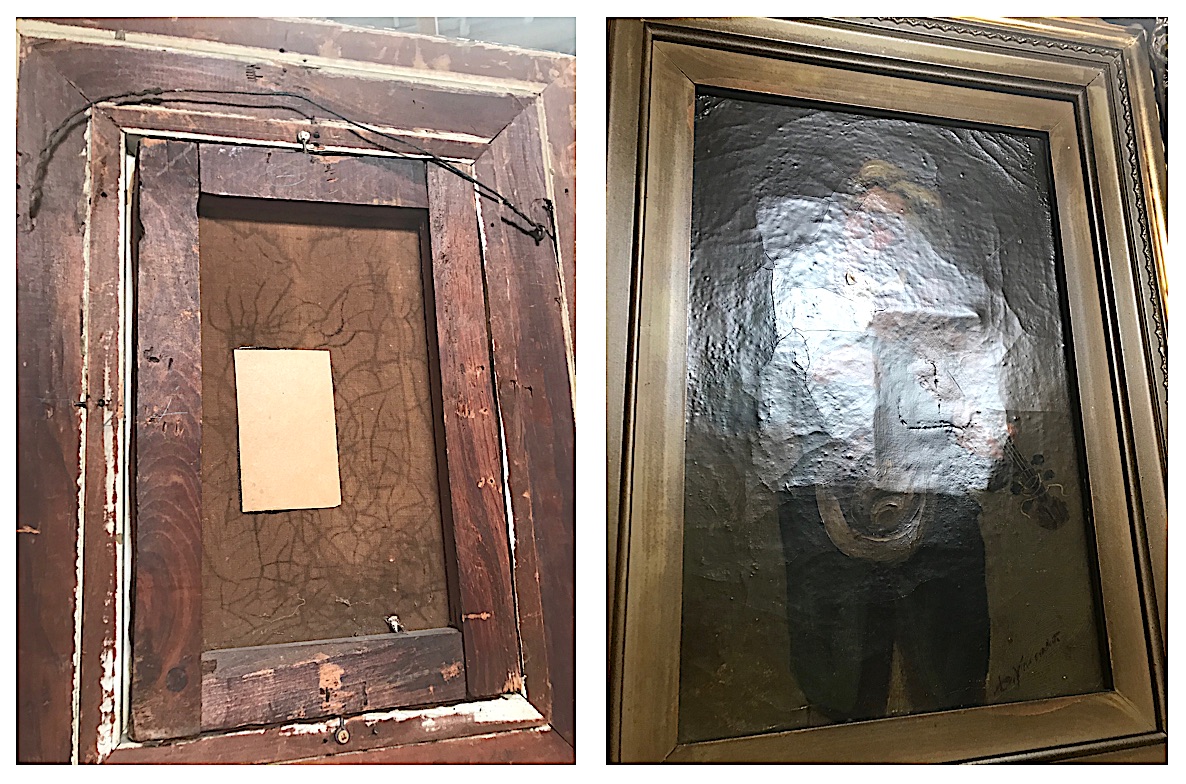
A treasured painting, a memory of early years, was ripped when a ladder went though the middle of the painting creating an ugly rip. Referred by a local museum, she called Fine Art Conservation Laboratories 805 564 3438 faclartdoc@gmail.com
Art conservators/restorers Scott M. Haskins, Virginia Panizzon
Leave a comment!

Have questions and want to chat? Call us. Click on the link to see a short video tour of the lab.
Monday - Friday 9-5

Tuesday, May 15, 2018

Protecting Public Art With Anti-Graffiti Coatings Varnishing Murals – Testimonial


By Scott M. Haskins, Mural Conservator

Forethought about protecting murals from graffiti is an essential part of the planning for art in a public place.

First of all, you need to understand the “why” before you can discuss the types of protective varnish to use form anti-graffiti protection.

These insights are offered to you by  the professionals hired by the City of Los Angeles to consult on protecting and preserving art, paintings and murals, Fine Art Conservation Laboratories.

Murals are part of a community’s heritage, part of the architecture, part of a community’s vibe and culture. They are not just a decoration. In the professional mural conservation field, when asked how long should art last, we think in terms of “generations.”

Professionals mural conservators (restorers) are bound by Ethics and Standards of Practice. These standards would theoretically imply:
1.     We do no harm to the original artwork... the materials we use should not cause harm to the original mural as they age or if they have to be removed
2.     This means, also, that anything we do to the mural should be reversible or safely removable in the future... even distant future.

Here’s the problem to be solved: Murals painted in acrylic paint remain very soluble-dissolvable (Keim and oil to a lesser degree but still...) forever. So, cleaning with anything except water is a problem. Of course, none of the stuff sprayed, spilled or deposited on murals is cleanable-removable in water. Solvents and citrus based strippers used to remove graffiti also attack-remove the original paint.

In other words, ANYTHING that is used to varnish the mural, will become part of the mural because it cannot be removed safely (for the artwork). So, let that idea percolate for a moment... if the varnish yellows, that will be the look of the mural in the future and there will be no way possible to remove the yellow. If the varnish cracks and peels (obviously unevenly) then you can’t remove it to redo it later.

This photo shows a hazy brown varnish layer over the artwork.


Despite this warning or inevitable negative situation, some entities have chosen a chemically unstable hard resin “permanent” protective varnish over a chemically stable sacrificial layering of removable or “thinnable” varnish. I think their choice is based on ignorance based on the opinions of non-conservation-preservation services within their bureaucratic channels, not because there has been a logical choice specifically for the benefit of artwork/murals.

The two schools of thought
for the choice of protective layer or varnish are:

1. The City of Los Angeles has adopted a policy, with the excuse of future minimal maintenance, to use a “permanent” hard coating. The name is “GCP 1000
Polyurethane Topcoat. Here is the link for application instructions. I suppose that because this is a commercial product, that this appeals to bureaucrats. I’ve also been told that some graffiti can be removed from this protective layer with a commercial cleaner called Goo Gone (another long term preservation problem).

The Office of Cultural Affairs chose this material at the recommendation of their graffiti abatement contractor. The photo below shows a brown varnish under the graffiti. This was a permanent hard coating applied over a sacrificial varnish, that was not yellowed or brown.

2. A “sacrificial” varnish layer is one that is applied so thickly that when tagged, the graffiti can be removed along with a layer of varnish without having to remove all the varnish. This means that the cleaning-removal solutions don’t come into contact with the original paint. After the graffiti removal, the surface needs to be re-protected or in other words, the sacrificial varnish layers need to be reapplied.

The resin used for the sacrificial layers is not a commercially available product, but can be purchased from conservation suppliers. The resin used is Rohm and Haas’ Paraloid B72. We usually spray apply 4 heavy coats of 15% solids (in xylene solvent). Then we follow up with 4-5 coats of 30% applied with rollers as thickly as can be possible applied without creating drips. On the mural in the video below, the artist originally thought to apply the thicker sacrificial layer only up on the wall about 8’. But yielded to reason when I showed him the nefarious techniques some vandals use to spray way up high on walls. So, we applied all the layers over the entire mural.

This photo shows the before and after of removing a decade of graffiti off of a thick protective sacrificial varnish.


Here is a quick video of applying the sacrificial varnish layer to a new mural at street level in Northridge (Los Angeles), CA and a short testimonial for our collaboration.

If you found this article interesting, please leave a constructive comment and give this webpage a “thumbs up.” Thanks!

Contact info for participants on this project


Roger Dolan, Lead Artist 818 902 1218 roger@muralenvironments.com

Don Larson, Northridge Beautification Foundation 818 401 5522 don@northridgebeautification.foundation

Scott Sterling, General Contractor 818 321 8644 scott@sterlingconstruction.us


About the Author, Scott M. Haskins: Click on this link


805 564 3438 faclartdoc@gmail.com

Saturday, April 28, 2018

Painting Restoration Testimonial, Salt Lake City

Painted about 1800

This is something we see all the time in our painting conservation laboratory; someone accidentally pokes the 19th century painting on canvas with very little effort and causes a hole or rip. Sometimes its amazing how fragile these paintings are.

Oil paintings on canvas from the 1800’s are very brittle... more brittle that any other period of art. This is because the additives into the fabric in order for them to be produced by industrial looms accelerates the deterioration by acids. I have in the lab canvas that is 200 years older that is 10 times stronger because it was made without the additives for mass production.

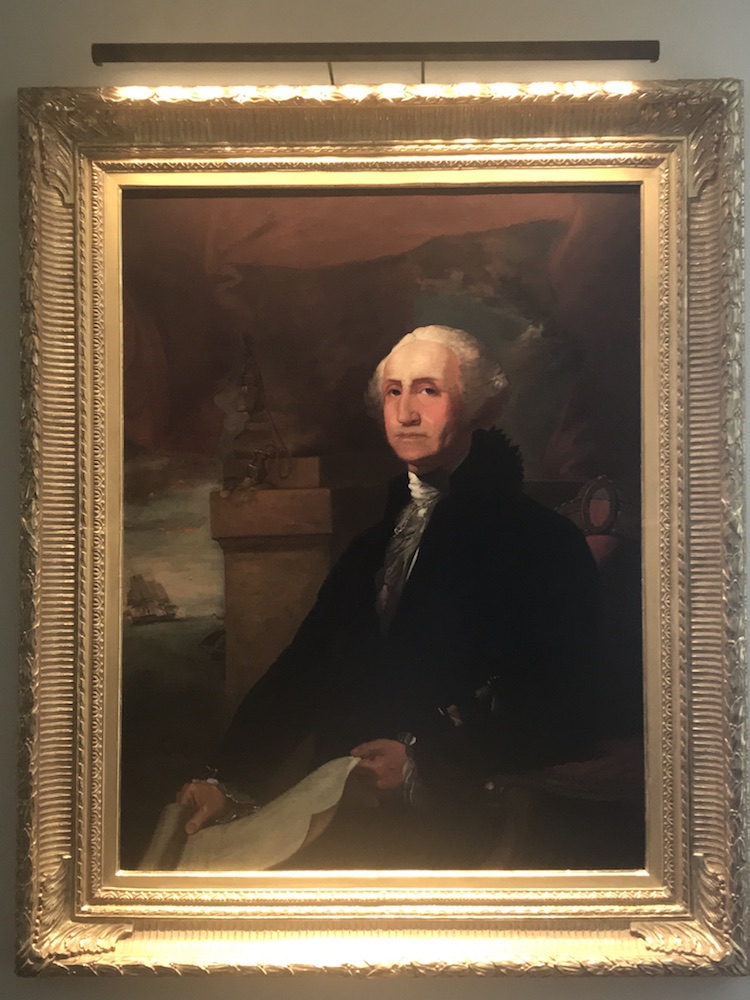
In the case of this “White House Quality” historical portrait of George Washington that was painted about 1800, the hanging wire which was a bit frayed, poked the art handler as it was being hung, the person reacted and accidentally hit against the portrait putting his elbow through the painting.

What might seem to have been a disaster, the owner chose to see the repair of the rip as a good excuse to have the painting cleaned of its yellowed varnish, have an historically appropriate frame made and to get a high tech light that would really show off his gorgeous artwork. As it was to be hung in a focal area of the home, it turned out to give a beautiful glow of quality to everything else in the room that he entertains in. Here is his testimonial:


We are often asked if we can cut costs by patching the rip. This option most always creates negative condition problems, sometime immediately and sometimes “down the road.” The patch sets up an uneven reaction of the canvas from humidity and heat setting into motion new cracking patterns and causing very often disfiguring bulges. In addition, the later removal of the patch can be problematic depending on how “permanent” the repairer meant it to be (it may be very hard to remove). In other words, you will be creating preservation problems almost immediately.

The distortion caused by patching a rip in an oil painting.[/caption]

Many smaller rips can be repaired very nicely without a general lining and can even be made to be minimally visible from the back.

If you buy a painting with a patch and you want to properly preserve and restore the artwork, then you will have to pay for the removal of the previous repair person’s sins in addition to redoing it correctly.

Here is a link to a video on how a proper rip repair is performed: https://www.youtube.com/watch?v=Xhhu0AZ_WVI

Note that this video offered 4 excellent tips for collectors 
to help determine the quality of the rip repair of an oil painting:
 
  • Realignment of ripped fibers must be exact – best done under a microscope

  •  
  • The fill or replacement of lost paint must be perfect and textured to match original surrounding paint

  •  
  • The inpainting colors (color matching of missing paint) must be exact in color and transparency

  •  
  • The gloss of the final result must be exactly like the surrounding areas.


  • Questions about your painting restoration interests? Call Scott M. Haskins, Oriana Montemurro, Virginia Panizzon Art Conservators at 805 564 3438 faclartdoc@gmail.com

    Tuesday, January 19, 2016

    Oil Painting Restoration, Santa Barbara, Ventura, Thousand Oaks


    Click on this link http://www.FineArtConservationLab.com to
    see a short video lab tour. Call us to discuss your art restoration questions.
    Click on SHOW MORE for contact info and other links

    Scott M. Haskins, Head of Conservation  805 564 3438  faclartdoc@gmail.com


    Cleaning an oil painting:
    https://www.youtube.com/watch?v=-DSzHcEBZ40

    Rip repair on oil painting:
    https://www.youtube.com/watch?v=g2Jxozdtl0w

    Water Damaged Art – Mold (by our client in Las Vegas):
    https://www.youtube.com/watch?v=r_YupoIRRcs

    Smoke damaged art: http://www.fineartconservationlab.com/in-lab/hopeless-smoke-damaged-paintings-given-new-life-3-valuable-tips/

    Video testimonials of paintings and mural restoration:
    https://www.youtube.com/playlist?list=PL41D80C1C65FF2CE7

    Written testimonials: http://www.fineartconservationlab.com/testimonials/

    Expert witness on art related matters:
    https://www.youtube.com/watch?v=_oeNfXQ26mM

    More legal testimony on art related matters:
    http://www.fineartconservationlab.com/art-damage-expert-witness-and-legal-testimony/

    Teamwork at FACL:
    https://www.youtube.com/watch?v=FIkMMWRy58k

    #ArtRestoration, #ArtConservation, #PaintingConservation,
    #PaintingRestoration, #RestoreAPainting,


    Art restoration, art conservation, painting restoration,
    painting conservation, restore an oil painting, authentication of art, art
    authentication, fix an oil painting, art restorationist,

    Sunday, June 22, 2014

    Banksy Mural Removed in S.F What's next...?

    Banksy's iconic mural of the rat with a beret was saved from obliteration due to the City's anti graffiti ordinance. Movie director Brian Greif had to promise to not sell it in order to be authorized to dismantle the outside redwood slats of the Victorian Height District home. But a firestorm of discussion ensued that pitted discussions of public art for the people and the greedy money grubbing art collectors that want to own it all. 

    Its been of such interest that the article took up serious square footage on the front page of the San Francisco Chronicle in this morning's Sunday paper with a full page spread on the inside.

    For the article, go to this linked page at the website of the firm that is in charge of the restoration of the mural, Scott M. Haskins and Fine Art Conservation Laboratories

    Friday, May 30, 2014

    200 YEAR OLD PAINTING NEWLY RESTORED RETURNS TO MISSION SAN JUAN CAPISTRANO

    This is a startling photo of Mission San Juan Capistrano if you know the mission today. It was taken prior to its restoration at the beginning of the 20th century. This last month, May 2014, Fine Art Conservation Laboratories completed the art conservation or painting restoration of the biggest most important painting in the Father Serra Chapel, Station of the Cross XII or The Crucifixion. This extremely large Spanish Colonial work of art is 12 1/2' tall x 7' wide. Here is the article about the project: http://tipsforfineartcollectors.org/oil-paintings/200-year-old-painting-newly-restored-returns-to-mission-san-juan-capistrano/

    Scott M. Haskins, professional art conservator from FACL, Inc.  explaining the details of the project.


    Saturday, February 8, 2014

    Pollock's 'Mural' restoration nearing completion

    • One of the main influencing "founding fathers" of Post War Abstract Expressionism in the United States was Jackson Pollock, hence one of the elements of his great fame and the astronomical values his paintings have. Perhaps one of his most famous paintings is this painting entitled "Mural" which belongs to the University of Iowa.

      Pollocks influence on both "schools" or centers of production in the Bay Area (Berkley) and in New York cannot be understated and influenced generations of artists. Fine Art Conservation Laboratories consistent work on Post War Abstract Expressionist paintings over the years have included most of the notable artists from the Berkley School.


      FILE - An Oct. 17, 2002, file photo is of the University of Iowa's painting titled: "Mural" by Jackson Pollock. The 70-year-old painting has been in the conservation department of the J. Paul Getty Museum in Los Angeles where it will go on display in March before a 10-month display in Sioux City, Iowa. The 8-foot by 20-foot piece was removed from the University of Iowa Museum of Art because the building was damaged by flooding in 2008. Photo: Deb Barber, AP

    IOWA CITY, Iowa (AP) — An extensive 19-month effort to study and restore a Jackson Pollock painting is nearly finished, officials say as they prepare to have the famous piece displayed in California and Iowa this year.
    The 1943 painting "Mural" has been in the conservation department of the J. Paul Getty Museum in Los Angeles since the summer the 2012, the Iowa City Press-Citizen reported (http://icp-c.com/1l0s9k6 ). Restoration has included stabilizing the piece's physical structure, which had been sagging, and removing a varnish added in the 1970s.
    "The painting started sagging very early in its life, probably as Pollock was painting it, because he probably himself didn't make strong enough of a stretcher for such a large painting," said Yvonne Szafran, head of the Getty's paintings conservation department. "That's keeping in mind this was the largest painting he had painted up until this point, and maybe the largest painting he ever does paint — it's certainly the widest."
    The restoration work involved examining slivers of paint under a microscope and using imaging technology to virtually see layers of color. The research has dispelled the myth that Pollack created the famed artwork in a 24-hour session, as well as determined that the artist used some house paint on the piece.
    University of Iowa Museum of Art Director Sean O'Harrow called the restoration, which was done pro bono, the most important modern art conservation effort in recent years.
    The 8-foot by 20-foot painting was removed from the University of Iowa Museum of Art before the building was damaged by flooding in 2008. The painting is owned by the university, which received it through a donation in 1951 by art collector Peggy Guggenheim. It is insured for $140 million and is considered one of the most important modern American paintings in history.
    The painting will go on display at the Getty in March before a 10-month stint at the Sioux City Art Center beginning in June.
    Officials hope to take the painting on an international tour with other Pollock works. It would return to Iowa City once a new space is built for the university's 14,000-piece art collection. The touring plans are still in its early stages.
    "While we build a new museum, we thought it would be the one, great opportunity to engage the world before it comes back to Iowa City," said O'Harrow.